Wednesday, 26 September 2012

Is Marketing Hard to Study?


I posted on this topic last year, but the issue comes around every September - so here we go again.

Here is a question you might not have asked yourself before you signed up to take a class in marketing:
Is marketing a hard subject to study?
My answer – as you might have already come to expect from an academic - is that it depends.
What can make it hard? Having observed thousands of marketing students over the years I have noted that there are three things that can commonly cause a problem – even for bright students – over and above issues that apply to all new students:
1. Information overload. A thing that often surprises new university students is that whilst the general complexity of ideas they must engage with is something that is not beyond them, the sheer quantity of information – pages to read, A/V materials to watch, lecturers to listen to – is an order of magnitude higher than anything they have encountered before. As a subject, marketing throws ideas at you from all directions over and above the general problem for new students.
2. Subject diversity. One of the descriptions I give of university marketing education [as opposed to professional training] is as a subject that pinches the shiny bits from social sciences and applies them in a commercial context. One day learning about marketing might require you to be a psychologist [consumer behaviour], the next might require you to be a sociologist [cultures of consumption] or an anthropologist [market segmentation]. Alongside these social science hats, marketing students must sometimes be technologists, economists, statisticians and so on. Some people have a genuine and deep talent in a narrow area – the maths wizard who can’t tie his own shoelaces. Marketing students that do well tend to have a wider knowledge and skill set. Jack-of-all-trades. Of course, the second half of that saying is master-of-none, and we’ll talk about that in the next blog post
3. Hierarchy of knowledge. That is a very posh phrase – what can it mean? Do you remember how you started studying mathematics? 2+2=4. After you mastered simple addition you would have moved onto subtraction, then multiplication and finally division. Years later and you might have been capable of second-order partial differentiation whilst picking your nose – but each and every intervening stage would have been built on the knowledge and skills you gained in the last. Marketing isn’t  like that most of the time. The way forward isn’t always clear and even selecting a starting point can be difficult.
Each of those can represent a real problem. Taken together, they can be a real killer. In the next post I’ll talk about you can manage these difficulties and outline the positives of being a marketing student.

Tuesday, 4 September 2012

Retro chic takes the kids to school?

“Mini has lost its cool” ran the blog headline, and I was hooked. This was at the #socialvoices blog on MSN. The reason I was hooked is that I’ve been thinking exactly the same thing myself for some time now but, as is the way, had never mentioned it to anyone in case I was the only one thinking it. But the blogger at #socialvoices came to the same conclusion. The BMW Mini was a brilliant marketing conception combined with high quality design and engineering. Chic retro is probably always in fashion, and certainly has been a great success story in the last decade. The BMW Mini was chic retro writ large, and a fantastic success story, but by 2012 it began to look as though a good idea had been pushed beyond its reasonably limits.

The issue here is line extension and brand extension, both of which are discussed in Marketing: An Introduction on pages 245-246. The original BMW Mini was extended to a clubman estate, which was still recognisably, essentially, the same car. The problem has arisen with more recent variants sharing the Mini name. The prime example: the Mini Countryman SUV, which at over four metres long is mini in name only. Is this a line extension or a brand extension? MAI tells us that a line extension is where new products are added within the same product category under the same brand name, while a brand extension is the use of a successful brand name to launch new or modified products in a new category.

Is the Mini Countryman SUV in the same product category as the Mini One (line extension), or is it in a different product category (brand extension)? Well, let’s leave that for our students to ponder over. The key point here is that MAI mentions a number of drawbacks to line and brand extensions: an overextended brand might lose its specific meaning, heavily extended brands can cause consumer confusion, and the damage might even affect the integrity of the underlying brand. Not very likely, one would think, when we are dealing with a sub-brand of the mighty BMW, and a sub-brand—Mini—that has carried all before it in recent years. On top of that, surely, putting two cool things together, the Mini brand and the SUV product category, has to work, doesn’t it?

Clearly I have my doubts, as does the #socialvoices blogger. The original BMW Mini was cool, retro chic which shouted “youthful fun” at you. The Mini Countryman SUV is designed to take the kids to school. Something isn’t quite right. The brand is being pulled a little too far. And, on my side, count Dan Neil of the Wall Street Journal Online, who calls the Mini Countryman “ridiculous … absurd … (resembling) an orthotic shoe” (http://online.wsj.com/article/SB10001424052748704615504576172832123217962.html?mod=WSJ_hpp_editorsPicks_2#articleTabs%3Darticle).

They’ll sell some cars. Will they damage the brand?


Thursday, 30 August 2012

Marketing in a crisis


One of my favourite case studies in Marketing: An Introduction is “The boycott of Arla Foods in the Middle East” by Dr Ibrahim Abosag of Manchester Business School. I can’t remember how many times I have used it as an example in the classroom, or just in everyday conversation. It is an example of how things can go badly wrong for a good company through no fault of its own. In the case study, Arla Foods gets caught in the cross-fire after a Danish newspaper publishes satirical cartoons featuring images considered offensive by many Muslims. It turns out that Arla, a Danish dairy products company, is very big in the Middle East, and loses out dramatically when Muslim customers decide to boycott Danish products. The case study then explains the processes that Arla went through to re-build their brand and their sales in these important markets.

As the second edition of Marketing: An Introduction hit the bookshops, another company was suffering a major hit to its brand name—G4S. Oddly enough, G4S also has a considerable amount of Danish in its past, tracing its roots to a Danish company founded in 1901 (http://www.g4s.com/en/Who%20we%20are/History/). Well-known brand names like Securicor and Group 4 have been incorporated into what is now G4S: “the world’s leading provider of security solutions” (http://www.g4s.com/en/Who%20we%20are/Our%20Business/). The G4S brand has run into difficulties because the company has been unable to fulfil commitments that it made as the provider of private security services to the London Olympic Games 2012. This has resulted in the G4S name being dragged through the mud across a wide range of media, with videos at YouTube, blogs, online and traditional news channels all sticking the boot in.

My question is: does the Arla Foods case study have any lessons that could help with the G4S situation? At first sight the answer seems to be “no”, because the crisis at Arla was clearly no fault of its own, and Arla is a marketer of consumer branded products (such as Lurpak, Anchor and Cravendale). The G4S crisis is perceived by the public as the company’s own fault, and G4S is a marketer of B2B security services. Totally different, right? Well, maybe.

The key lesson from the Arla case study is that a company dealing with this kind of crisis has to put in place a carefully planned process to restore the credibility of the brand. What not to do is simply to respond with a communications campaign designed to tell everyone how great you are. Just getting out there and selling the message is something that marketers might reasonably be accused of, on occasion. But when you are facing this kind of crisis it is definitely the wrong thing to do. Sure, a communications campaign is going to happen, later on in the process. Before that happens, however, all of the stakeholders affected have to be researched, consulted and involved in the planning process, and the problem needs to be resolved. As we keep emphasising in Marketing: An Introduction, marketing is about more than telling people how great you are and selling your message. Never more so than when you are dealing with a crisis that has turned customers against you.     

Friday, 17 August 2012

LinkedIn and the marketing student

In the 2nd edition of Marketing: An Introduction we have included a lot of coverage of digital marketing and social media in marketing. Obviously we had to do that ...  although, I think an important question for marketers right now is how to strike the right balance between offline and online marketing, and just how much to rely on social media as part of the marketing mix. The notion that marketing is "all about digital now" or "all about social media now" is clearly wrong. That is just hype. I mean, if that was true, then why are the TV programmes I watch and the newspapers I read full of ads?

Still, digital is really important, and social media must be embraced. Something that may confuse the marketing student, however, is the role of LinkedIn. We are all (by which I mean all of us who read blogs like this and teach or study marketing) familiar with Facebook, Twitter, Blogger, YouTube and probably a few other social media applications. But just what is LinkedIn for? I think this is a useful question for the marketing student to reflect on.

At first sight LinkedIn is just, and I hesitate to say this, but it's just boring. In comparison to FB it makes a pretty poor visual impression. In my experience the average student when asked to scope out LinkedIn comes away with a "what's it all about?" kind of expression. In the short term this is probably not a problem. If you are a new marketing student who still has a long way to go until you start thinking seriously about getting into a long-term marketing career, then the immediate value of LinkedIn to you is limited.

But here are three suggestions for you to think about for the future. Firstly, LinkedIn is becoming an increasingly useful tool for generating B2B marketing lists for direct marketing purposes, and this is only going to grow in importance. Secondly, LinkedIn is the location where a lot of specialist marketing forums get together to network and to exhange the latest information about marketing theory and practice. Thirdly, and possibly the most important to you in the near future, LinkedIn is increasingly the place where potential employees go to advertise their skills and employers go to find new talent.

So, dull it may seem. But keep a close eye on LinkedIn. It could be very useful in your future marketing career.

Friday, 10 August 2012

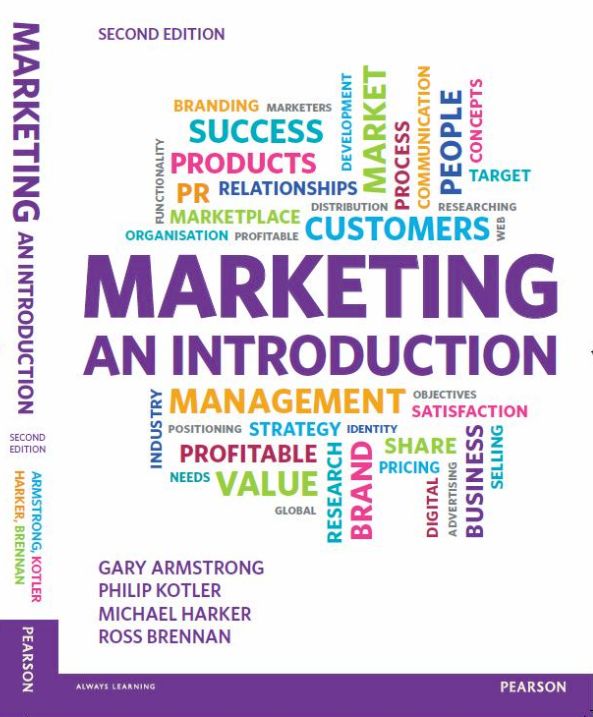
Cupcakes, Carousels and Covers

Here is the cover of the second edition


We negotiated this one after not being thrilled with the designs originally sent to us. Here are a few examples.


Discussing these led to a memorable if surreal exchange:

'Why cupcakes?'
'Cupcakes are HUGE right now!'


Thursday, 2 August 2012

Twits

Obviously you have found this blog. Also be advised that there is a Twitter feed in support of the book, to be found at:

@IntrotoMKT


Normally we don't follow students back - for your privacy rather than disinterest. Be sure to look after your own privacy settings in any case.


Friday, 27 July 2012

Revenue - eBay and Paypal

It is quite likely that you have bought or sold something via eBay. Did you know that Paypal belonged to the same organisation? Below we have a chart from Venturebeat - a website that reports on stories and issues in E-Marketing - to show how the revenues from one correlate to the other. If this surprises you, try and make your next eBay deal without using Paypal.